Email: sales@michaeldark.co.uk | Telephone: 01626 334134
 Fresh Flowers Trade Login
Cellophane Wrap for Florists: Types, Techniques and Trade Tips
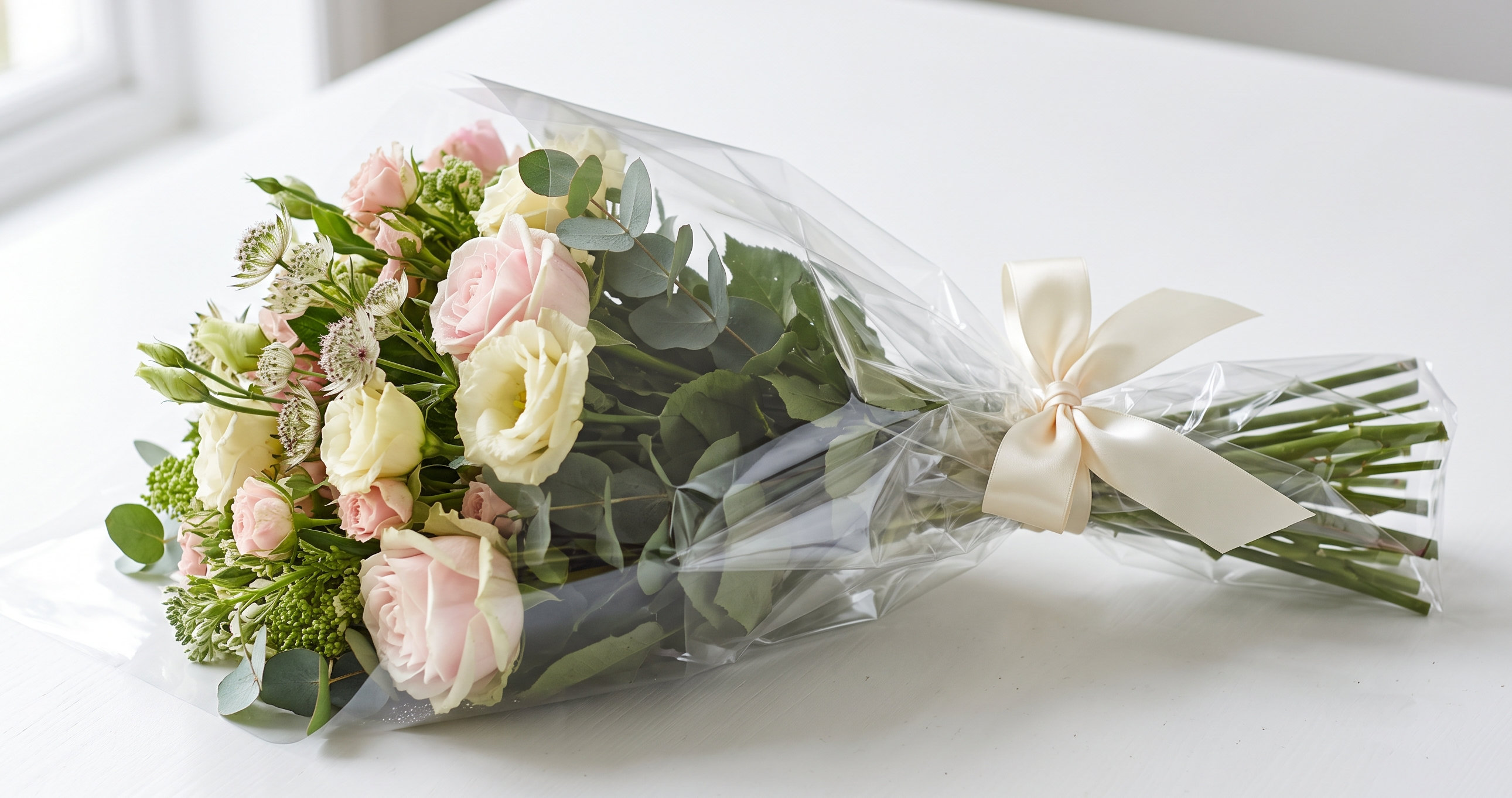
A trade florist's guide to cellophane wrap. Learn the difference between clear, coloured, and frosted finishes, plus step by step wrapping techniques.
Cellophane is one of those supplies that looks simple until you're standing in front of a roll wondering why your wrap keeps crinkling, your edges won't sit flat, or your bouquet looks like it's been packaged by someone in a hurry.
Good wrapping elevates a bouquet. It protects the flowers, frames the arrangement, and makes the whole thing feel like a proper gift rather than a bunch of stems tied together. For florists working at volume, wrapping isn't just presentation. It's part of the product, and inconsistent wrapping slows down production.
What Is Cellophane Wrap and Why Do Florists Use It?
Cellophane is a thin, transparent film made from cellulose. In floristry, it serves three purposes: protection, presentation, and water retention.
• Protection: Cellophane shields flowers from wind, dust, and light damage during transport. It also stops petals catching on bags, car seats, and anything else between your shop and the recipient.
• Presentation: A well wrapped bouquet looks finished. The cellophane frames the flowers, adds structure, and creates that professional gift shop appearance customers expect.
• Water retention: Wrapped bouquets hold moisture better. The cellophane traps humidity around the stems, keeping flowers fresher for longer before they reach a vase.
True cellophane is biodegradable since it's plant based. However, most florist wrap sold as "cellophane" is actually polypropylene (PP) or BOPP, which is plastic. If sustainability matters to your customers, check what you're actually buying.
Types of Cellophane Wrap
Clear Cellophane
The standard. Clear cellophane lets the flowers speak for themselves. It's versatile enough for any bouquet, any occasion, and any colour palette.
BEST FOR
• Hand tied bouquets
• Mixed arrangements where colour is the feature
• Sympathy flowers (keeps the focus on the blooms)
• Everyday orders where speed matters
Clear wrap comes in different thicknesses. Thinner film (20 to 30 micron) is cheaper and works for light bouquets. Thicker film (40+ micron) holds its shape better and suits larger arrangements.
Coloured and Patterned Cellophane
Coloured wraps add a design element beyond the flowers themselves. Solid colours can complement or contrast with blooms. Patterns (dots, stripes, prints) add personality.
BEST FOR
• Gift bouquets where packaging is part of the appeal
• Seasonal arrangements (red for Christmas, pastels for Easter)
• Children's bouquets or novelty designs
• Branded wrapping with custom prints
The risk with colour is clashing. A red cellophane might fight with pink roses rather than complement them. When in doubt, stick to neutrals or use colour sparingly as an accent layer inside clear wrap.
Frosted and Matte Finishes
Frosted cellophane has a softer, diffused appearance. It's less shiny than clear wrap and photographs better without glare.
BEST FOR
• Wedding bouquets and bridal work
• High end gifts where subtlety matters
• Arrangements being photographed for social media
• Customers who want an "expensive" look
Matte finishes work similarly. Both reduce the plastic shine that can cheapen an otherwise beautiful arrangement.
How to Wrap a Bouquet with Cellophane
This technique works for standard hand tied bouquets. Adjust the paper size and folds for larger or smaller arrangements.
YOU'LL NEED
• Cellophane sheet (roughly 60cm x 60cm for a medium bouquet)
• Ribbon or raffia
• Scissors
• Tissue paper (optional, for layering)
STEP BY STEP
1. Lay the cellophane flat. Position it as a diamond shape with one corner pointing towards you.
2. Place the bouquet diagonally. The stems should point towards the bottom corner, flower heads towards the top.
3. Fold the bottom corner up. Bring it over the stems, tucking it underneath to create a pocket that holds water if needed.
4. Fold the side corners in. Left side first, then right, overlapping them at the front of the bouquet. This creates the classic wrapped shape.
5. Secure at the tie point. Gather the cellophane at the stem tie point and wrap with ribbon, raffia, or twine.
6. Adjust the top. Fan out the cellophane above the flowers. You can leave it loose and natural or create deliberate pleats for a more structured look.
Pro tip: If your cellophane keeps sliding, a tiny piece of double sided tape between layers holds everything in place without showing. For high volume wrapping, this small step significantly speeds up production.
Cellophane vs Kraft Paper vs Tissue
Each wrapping material has its place:
• Cellophane: Best for protection, formal gifts, water retention. Avoid when eco focused customers want alternatives (unless bio based).
• Kraft paper: Best for rustic style, eco conscious customers, cost savings. Avoid for very delicate flowers or wet conditions.
• Tissue paper: Best for layering under cellophane, colour accents, padding. Avoid as the only layer (no protection).
Many florists layer materials. Tissue inside cellophane adds colour and cushioning. Kraft paper with a cellophane window combines eco appeal with visibility.
Tips for a Professional Finish
• Cut cleanly. Ragged edges look amateur. Use sharp scissors or a rotary cutter.
• Watch the static. Cellophane attracts dust and clings to itself. Keep your work surface clean.
• Don't over wrap. Too much cellophane suffocates a bouquet and looks bulky.
• Match ribbon to style. Satin for formal, raffia for rustic, twine for natural.
• Consider the customer's journey. A car bouquet can be looser than one going on the Tube.
What to Look for When Buying in Bulk
When sourcing cellophane for trade use, quality matters more than you might think. Cheap film causes tearing, poor presentation, and slower packing time.
LOOK FOR
• Consistent roll quality without thin patches
• Clean cuts (no tearing or stretching)
• Reliable thickness across the roll
• Minimal static cling
Storage: Stand rolls upright or lay them flat. Keep in a cool, dry place. Heat makes cellophane brittle; humidity makes it sticky.
Why Trade Florists Choose Floralcraft
Our Floralcraft packaging range is designed for trade use: bulk rolls for efficiency, consistent quality for reliable wrapping, and competitive pricing for florists producing bouquets daily.
Browse the full range, including cellophane rolls and ribbons.
