Email: sales@michaeldark.co.uk | Telephone: 01626 334134
 Fresh Flowers Trade Login
How to Choose Floral Foam: A Trade Guide to Wet, Dry and Eco Options
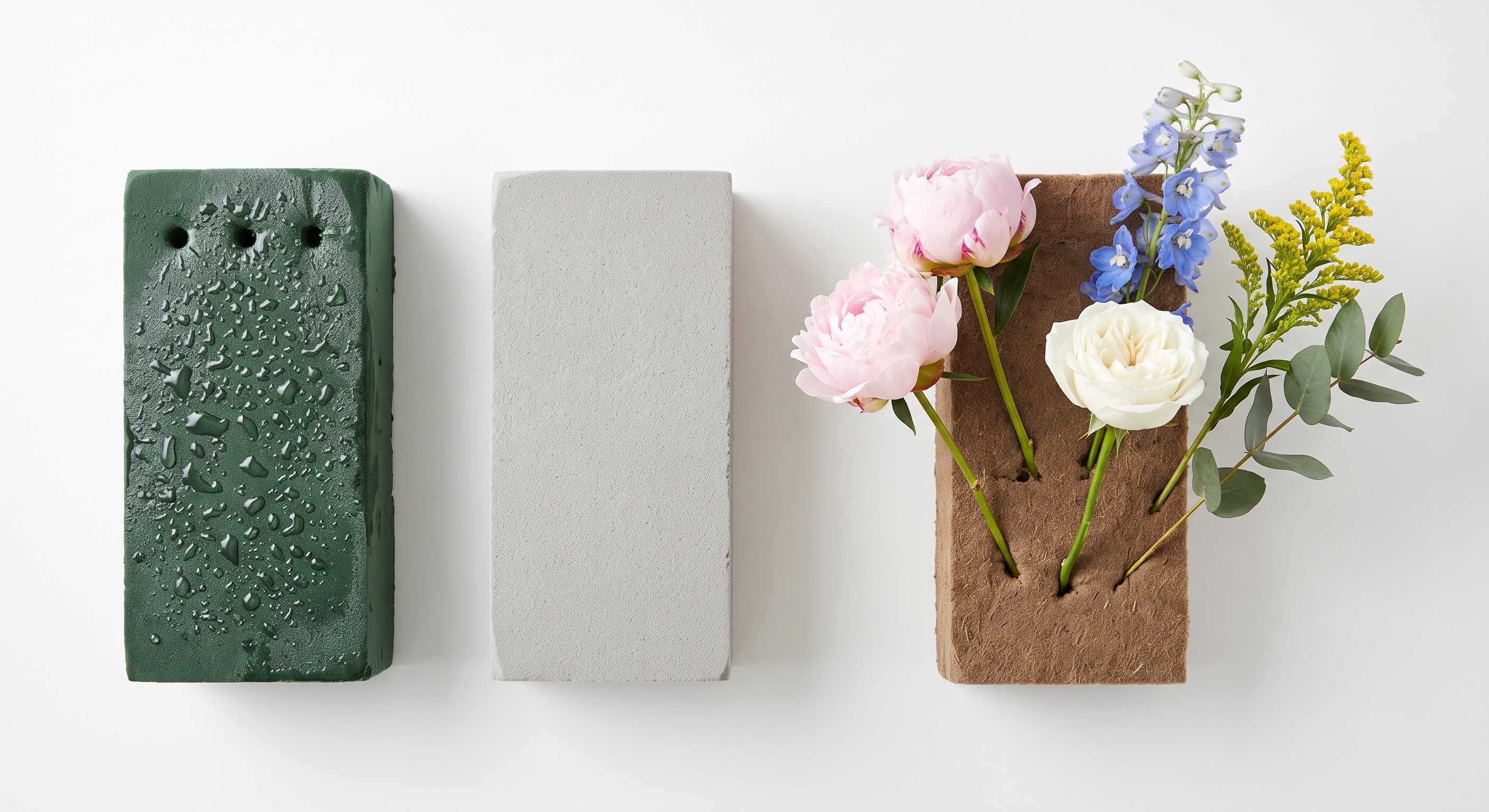
Floral foam is one of those supplies that every florist uses but few think about deeply. You grab a block, soak it (or don't), and get on with the arrangement. But choosing the wrong foam for the job can mean wilting flowers, collapsing structures, or frustrated clients asking why their centrepiece fell apart before the speeches.
For florists working at volume, getting this right matters even more. The wrong foam choice on a 30-table wedding or a week's worth of funeral tributes isn't just an inconvenience. It's wasted stock, wasted time, and reputation damage.
This guide breaks down the three main types of floral foam, when to use each, and how to prepare them properly. We'll also cover the growing range of eco-friendly alternatives for florists looking to offer sustainable options.
What Is Floral Foam and Why Do Florists Use It?
Floral foam is a lightweight, porous material that holds flower stems in place while providing water (in the case of wet foam) or structural support (for dry foam). It's been a florist's staple since the 1950s when OASIS invented the first commercial foam block.
The main advantages are simple: it holds stems exactly where you put them, it's easy to cut into any shape, and it makes arranging faster than traditional methods like chicken wire or pin frogs.
For trade florists, foam remains the most efficient mechanic for high-volume work: funeral tributes, event floristry, retail bouquet production, and contract work where consistency matters.
How to Use Wet Floral Foam
Wet foam (sometimes called fresh flower foam) is the green foam you'll use most often. It's designed to absorb water and release it slowly to fresh cut flowers, keeping them hydrated in the arrangement.
Best for:
• Fresh flower arrangements
• Funeral tributes and sympathy work
• Wedding and event floristry
• Table centrepieces
• Retail bouquet production
Not suitable for:
• Dried flowers (the moisture will cause mould)
• Artificial flowers (unnecessary and adds weight)
• Very heavy stems (wet foam can crumble under pressure)
For florists working at scale, wet foam bricks are the go-to choice. They're consistent, reliable, and fast to work with across large orders.
How to Soak Wet Floral Foam Properly
This is where a lot of florists go wrong, and it's one of the biggest causes of premature flower failure in event work. The temptation is to push the foam under water to speed things up. Don't.
The correct method:
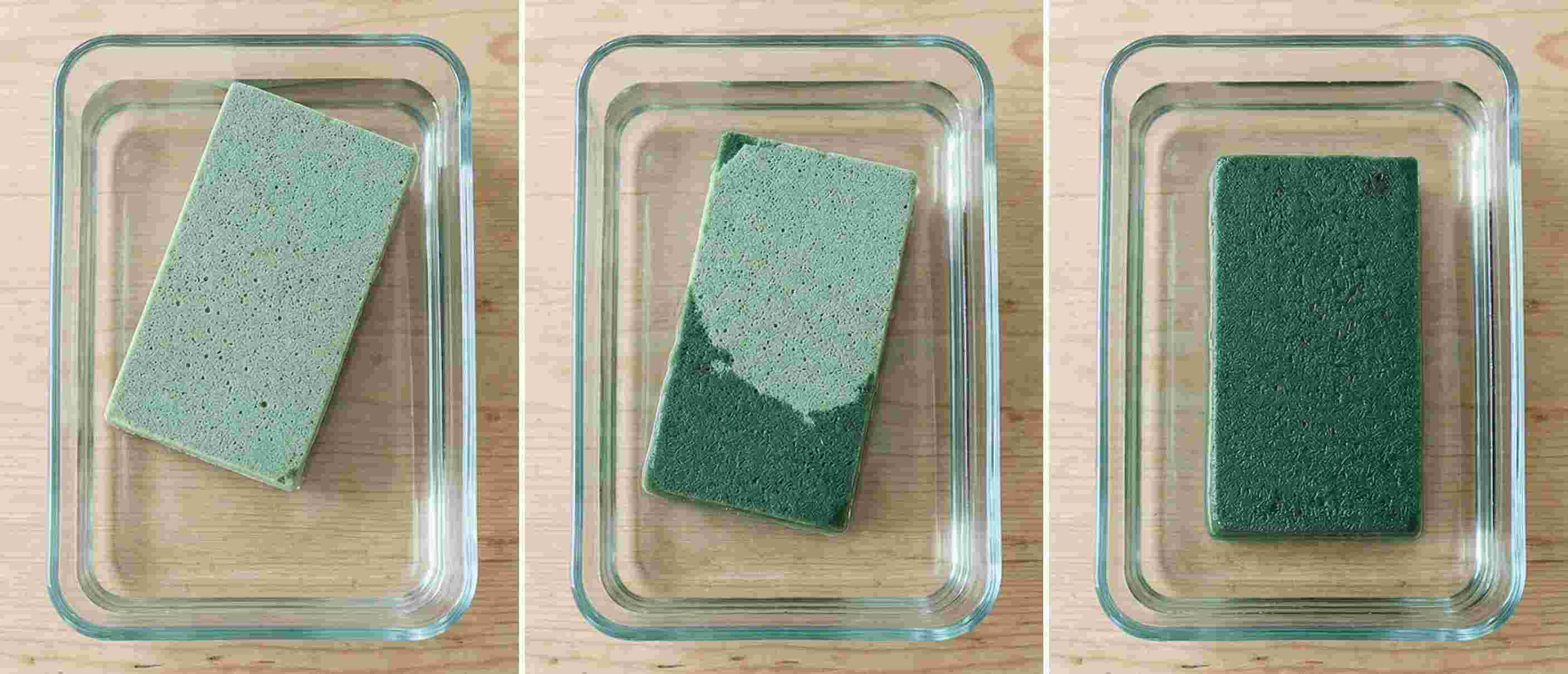
• Fill a container with room temperature water (cold water absorbs more slowly)
• Float the foam block on the surface
• Let it sink naturally under its own weight
• Wait until no dry patches remain on top (usually 1 to 2 minutes for a standard brick)
• Lift it out and let excess water drain briefly
Forcing foam underwater traps air pockets inside. Those dry spots won't absorb water later, leaving some stems without hydration. Your flowers will wilt from the inside out and you won't know why until it's too late.
When you're prepping 50 arrangements for an event, it's tempting to rush this step. Don't. Two minutes per block now saves you from callbacks later.
Pro tip: Add flower food to the soaking water. The foam absorbs the solution along with the water, feeding your flowers from the start.
Dry Floral Foam: When and How to Use It
Dry foam (usually grey or brown) is denser than wet foam and designed for arrangements that don't need water. It provides structural support without any moisture.
Best for:
• Dried flower arrangements
• Artificial and silk flower displays
• Permanent installations
• Wreaths and door decorations
• Retail display pieces
• Seasonal décor (Christmas, Easter, etc.)
Unlike wet foam, dry foam doesn't need preparation. Cut it to shape and start arranging. The main thing to watch is dust. Cutting dry foam releases fine particles, so work in a ventilated area or wear a mask if you're shaping multiple blocks.
Eco Friendly Floral Foam Alternatives
Traditional floral foam is made from phenolic plastic. It doesn't biodegrade, it breaks into microplastics, and it can't be recycled. For florists concerned about sustainability, or serving clients who are, this is increasingly a conversation you'll need to have.
Biodegradable Foam Options
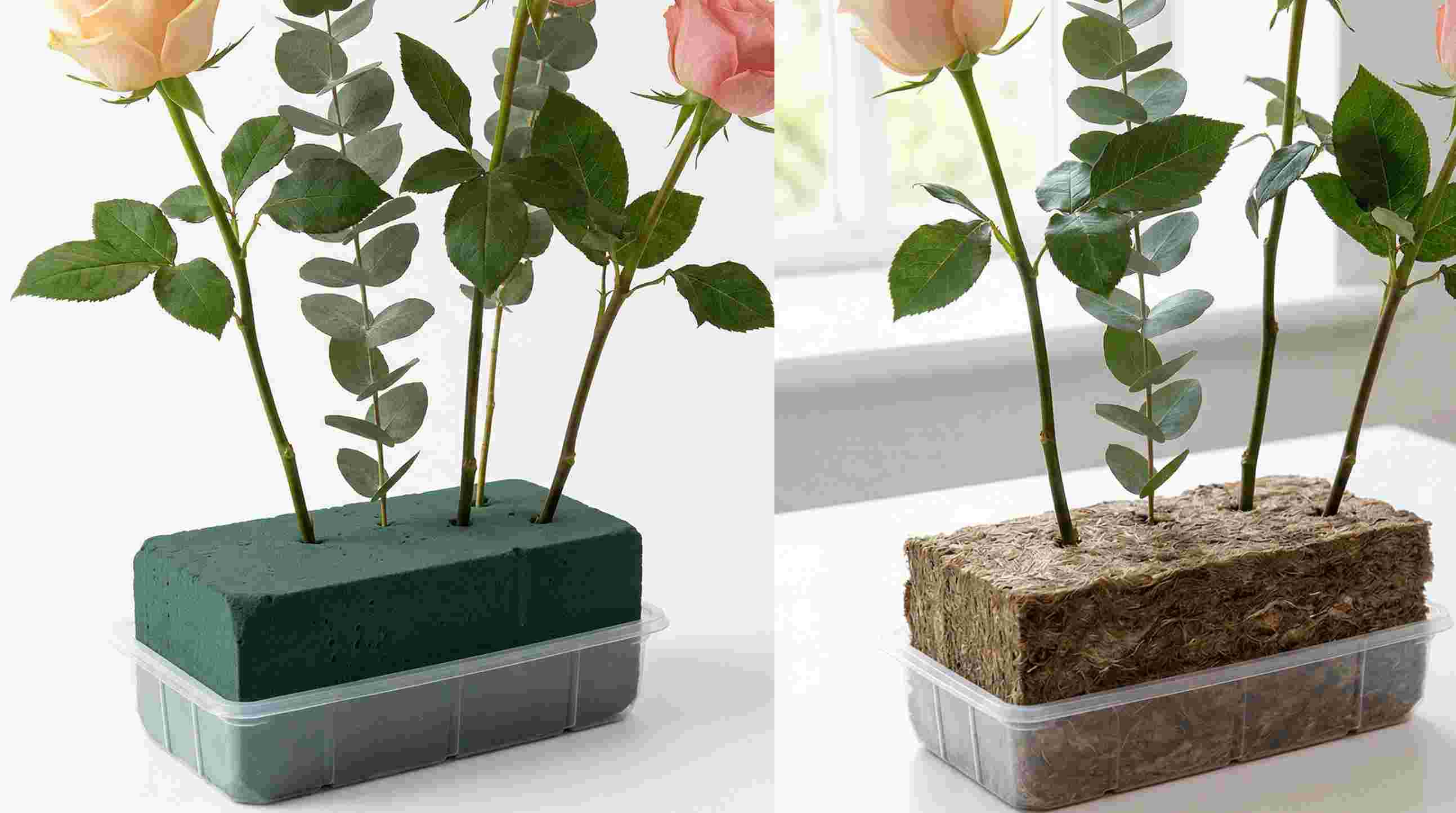
Several manufacturers now produce eco floral foam that breaks down naturally. These typically use plant based materials and decompose within months rather than centuries.
The trade off is performance. Biodegradable foams often don't hold water quite as well or for as long as traditional options. They may also be softer, making them less suitable for heavy stems.
That said, for many arrangements they work perfectly well. Trial them on smaller jobs first to get a feel for how they behave. Many florists now offer eco foam as a premium option for weddings and environmentally conscious clients.
Foam Free Mechanics
Some florists are moving away from foam entirely. Traditional techniques that predated foam are making a comeback:
• Chicken wire: Crumpled into a ball inside a container, it holds stems in place while allowing them to sit in water.
• Pin frogs (kenzan): Metal bases with sharp pins that hold stems upright. Perfect for ikebana style designs.
• Moss and natural bases: For dried and artificial work, compressed moss or straw bases offer a sustainable alternative.
• Tape grids: Clear waterproof tape across the top of a vase creates a grid for stem placement.
Most trade florists use a hybrid approach: foam for volume work, foam-free for premium or bespoke jobs.
Floral Foam Shapes and Sizes
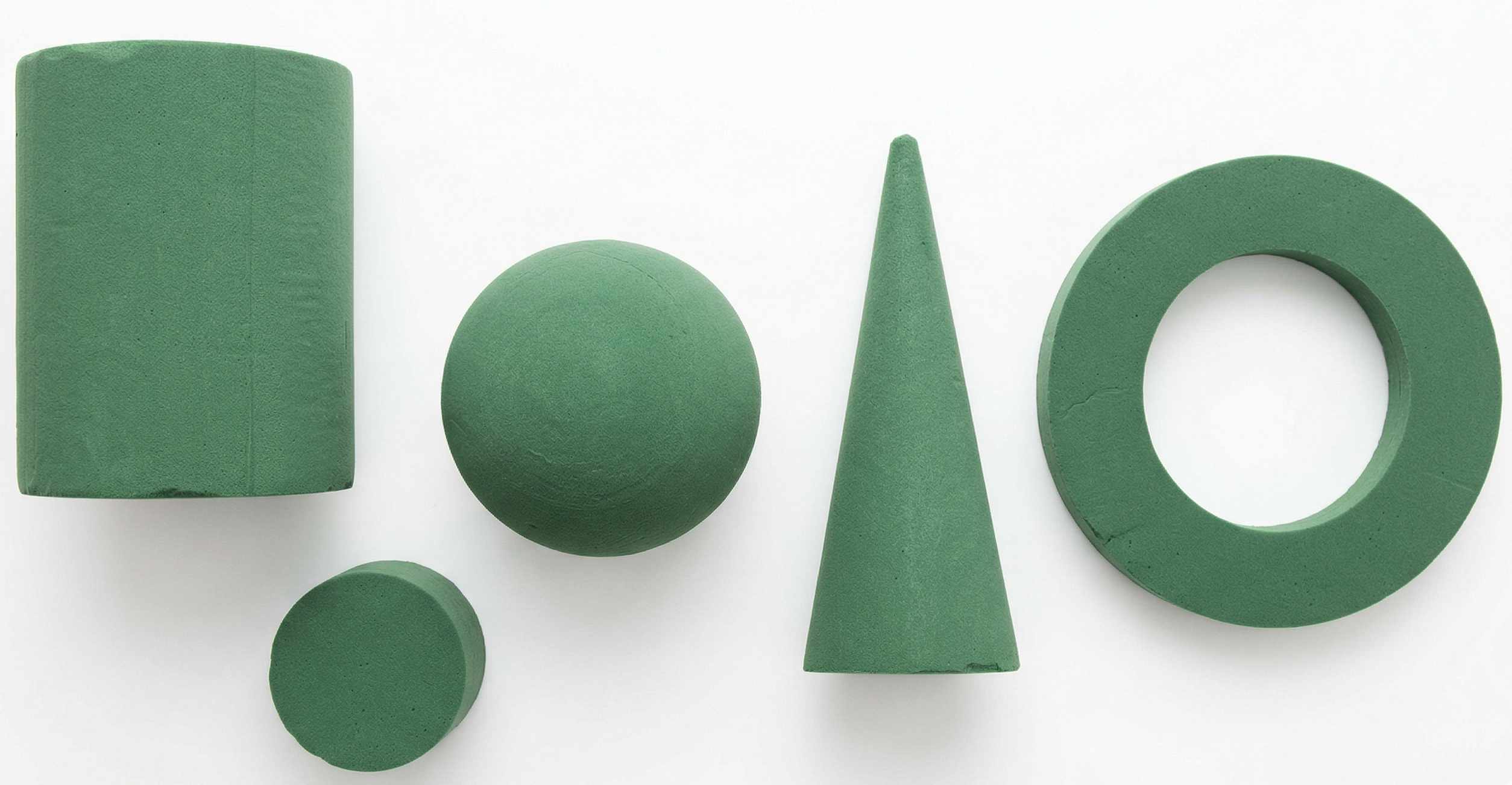
Beyond standard bricks, floral foam comes in pre-cut shapes that save time on specific projects: spheres, cones, rings, cylinders, and trays.
Using pre-cut shapes isn't lazy. It's efficient. If a ring saves you ten minutes per wreath and you're making thirty for a funeral, that's five hours back in your day.
For trade florists, buying foam in bulk packs means lower cost per unit and consistency across jobs.
How to Choose the Right Floral Foam
• Are the flowers fresh, dried, or artificial? Fresh = wet foam. Dried or artificial = dry foam.
• How heavy are the stems? Delicate stems work in standard foam. Heavy branches need denser blocks.
• Does sustainability matter for this job? If yes, consider biodegradable foam or foam-free techniques.
Common Floral Foam Mistakes to Avoid
• Re-soaking wet foam: Once dried out, it won't absorb water properly again. Start fresh.
• Using wet foam for dried flowers: Moisture causes mould. Always use dry foam.
• Forcing foam underwater: Let it sink naturally. Patience now prevents wilting later.
• Cutting too close to stems: Leave a bit of foam around inserted stems.
• Ignoring weight limits: Foam holds flowers, not tree branches. Heavy materials need wire reinforcement.
Why Trade Florists Choose Floralcraft®
Our Floralcraft® floral foam range is designed for trade use: supplied in bulk-friendly packs, consistent quality across batches, and reliable performance for events, retail, and funeral work.
Browse the full floral foam range, including wet foam bricks, eco alternatives, and pre-cut shapes.
